Six years after the accident, I was about to be born. My mother was in labour and the doctors were worried. As a young child, she had contracted Rheumatic Fever and although she had survived it, it had left her with a damaged heart and some other life-long side effects that could possibly effect a pregnancy. I was the last of her four children, all of whom had been born safe and well. However, earlier in this pregnancy complications had set in and were becoming life-threatening. The doctors advised her not to continue with the pregnancy as, if she did, it was likely that she or her baby could die. She carried full term but now, during the labour, the contractions were not bringing about the desired effect and, as the doctors had told her, there was a real chance that one or both of us would not make it through. God’s hand however, guided the event and both mother and baby did just fine.
Many years later, my wife told me a nearly identical story about her own birth. The midwife in that scenario had berated her mother in the fourth month for allowing the pregnancy to continue because of a serious complication. Her mother, being a committed Catholic, had continued and both mother and baby were perfectly well.
For now, all was well and running smoothly in our typical Mediterranean household. We lived in Pieta, close to Floriana and the city of Valletta. For the next year and five months, it seems all was pretty normal but, on the 3rd September, 1939, Britain declared war on Germany and Malta, being a British colony, was suddenly at war.
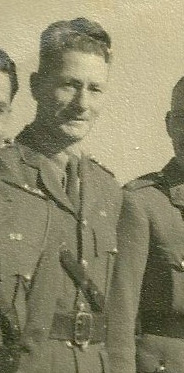 The first change that took place in our household was that my father was called up to active duty with the KINGS OWN MALTA REGIMENT.
The historic bombing of the tiny island of Malta did not, in fact, start at that date. According to an account taken from the book “Malta Magnificent”, written in Malta by Anthony Gerard, in 1942, it was not till Italy joined the war on the 10th of June, 1940 that the attacks began, albeit, very half-heartedly. Many families in Malta were in an awkward position because they had Italian connections. Our family was solidly English and escaped this rather painful dilemma. However, we did not escape the flying bombs that came our way as Hitler sent his Luftwaffe to take over the job of subduing this tricky little Island.
I was barely two years of age and, as it happened, we were living in one of the key target areas of Malta. Inevitably, our house was hit. My older sisters tell me that they were left standing in the shell of the basement of our home as the upper floors collapsed around them. They were lucky, many people in Malta died in their cellar shelters. My family climbed out through a huge opening which had appeared as they stood, backs against the wall which shielded them.
We moved from place to place and, in all, lost five houses. In one of these bombing events, our maid picked me up and ran with me down the cellar steps. She was not to survive the raid unhurt. The blast threw her violently, irrevocably damaging both of her legs as she was knocked unconscious. Eventually, the family came looking for her and me, her charge. I was told that they were happy but astonished to find me hanging, quite unhurt, on a hook on the wall which had caught onto my toddler clothes.
I do believe now that God’s hand was noticeable in each of these events. My father was now Captain George West and stationed in Siggiewi in the south of the island. The rest of the family, my mother, myself and my three sisters, eventually moved to Gozo, the small island next to Malta. Once we were in Gozo it was slightly safer but, even there, people had to be careful not to be outdoors too long since the bombers often swooped down low over the fields and fired on anyone who was visible.
It is strange though that, my memory of these important times is nearly blank. I often wonder why. Only small snippets appear, like being treated for pains in my leg by the local doctor who thought I may have polio but this was not so.